Review 03 / textile knowledge
Sadu House: look for structure, not a pattern code
The visit becomes richer when weaving is approached as knowledge carried through fibre, tension, sequence and community practice.
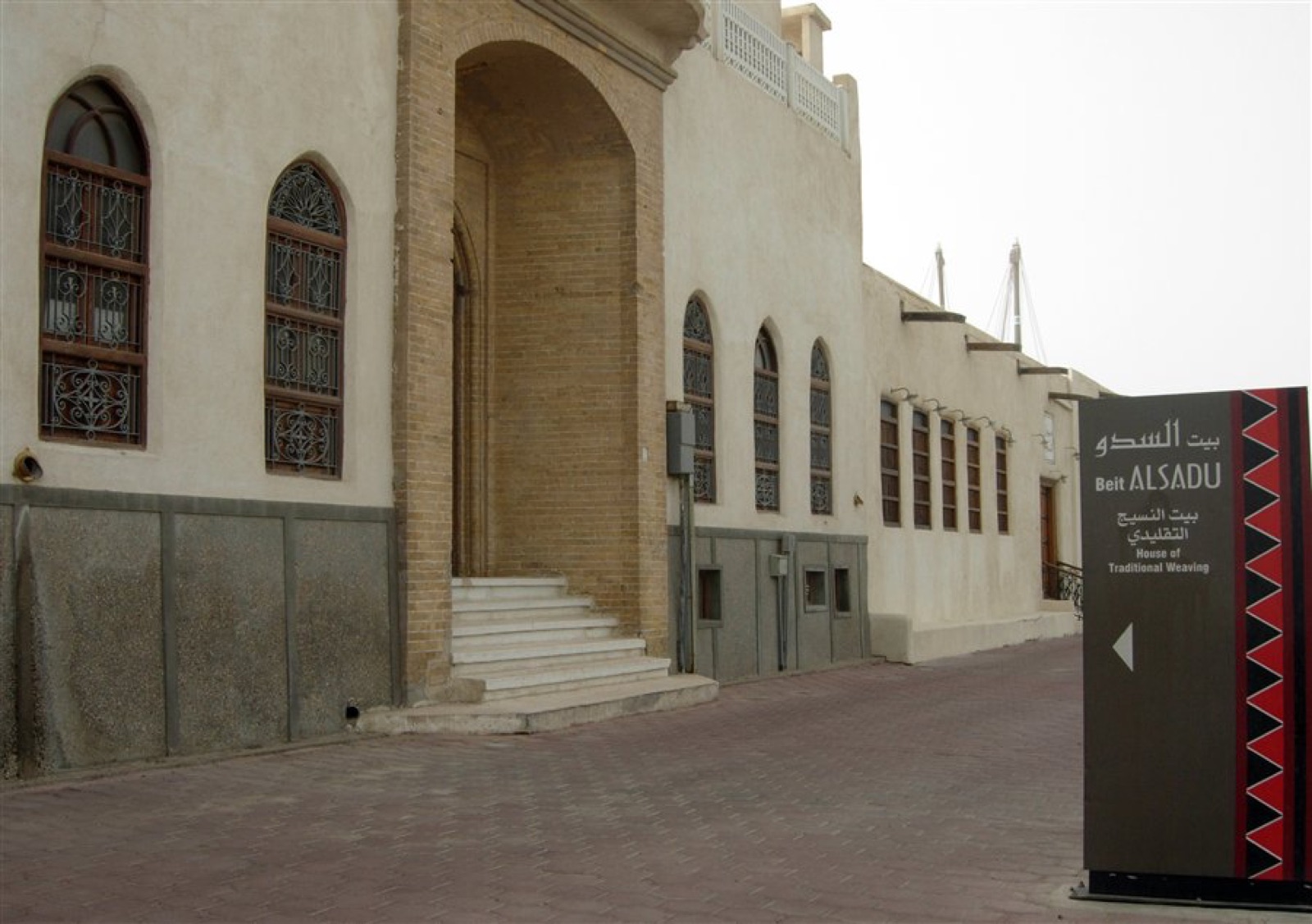
Sadu House is associated with the preservation and presentation of Al Sadu weaving and related cultural knowledge. It is best understood as more than a room of attractive textiles. The objects, vocabulary, programmes and contemporary activity can connect material practice with memory and cultural continuity. Because exhibitions, workshops, opening arrangements and retail or event functions can change, verify the current public offer directly before visiting.
What makes this place distinct
Textile structure is often difficult to read through photographs. In person, scale, thickness, edge, join and surface rhythm become visible. Start by asking what the textile had to do: divide space, furnish a tent, carry goods, identify an object or serve another function named by the display. Function affects width, strength, construction and the relation between decorative bands and the whole.
Learn a few material terms
Warp and weft are not abstract vocabulary. Warp threads are held under tension; the weft passes across them. A narrow loom width, joined panels or a finished edge can reveal stages in construction. Use museum interpretation for fibre, dye and technique. Colour alone cannot prove a plant source, age or place, especially after wear, cleaning, fading and modern reproduction.
Best first question
Where does the making sequence remain visible? Follow an edge, join, change of band, irregularity or repair instead of searching immediately for symbolic meaning.
Pattern is not a universal dictionary
Travel writing often assigns fixed meanings to every triangle, diamond or colour. That can turn living knowledge into a convenient code unsupported by the object record. Motifs may carry names, associations or uses within particular communities, but interpretation requires an informed source. Describe repetition, alternation, direction and scale first, then use the institution's terminology when it is supplied.
Look for the maker without inventing one
A label may name a weaver, community, workshop, region or date; it may also leave some fields open. Preserve exactly what is documented. Do not assign an anonymous historic textile to a specific woman, family or desert location because a general story feels plausible. At the same time, avoid language that makes craft appear automatic: weaving involves design, calculation, embodied skill and decisions.
Historic and contemporary work can meet
Cultural preservation is not the same as freezing a craft at one imagined moment. Contemporary makers, designers and educational programmes may work with inherited techniques in new contexts. Compare what the label says about date, material and maker rather than deciding that older-looking colours are “authentic” and newer work is merely commercial. Continuity can include adaptation.
The building shapes the visit
Sadu House also offers an architectural and urban setting. Observe how rooms, courtyards, thresholds and display furniture affect textile scale and movement. Do not assume every visible architectural feature is original to one period; use the site's interpretation where building history matters. A wide photograph can preserve the relation between cloth and room more honestly than an isolated motif.
Who will value it most?
This is a strong choice for visitors interested in textile design, making processes, women's cultural history, interiors and living heritage. It can work well for families when attention stays on touch-free visual comparisons: narrow versus wide, dense versus open, repeated versus interrupted. A workshop, talk or demonstration can transform the visit, but such programmes must be confirmed rather than assumed.
Photograph the whole before the motif
If photography is allowed, record the textile's complete proportions and display orientation before taking a pattern detail. A tight crop can erase width, joined panels, borders and functional edges—the evidence that explains construction. Include the label in a separate frame and note when glare or mounting hides the reverse. Never lift, flatten or move textile material to improve the picture.
The honest planning note
Check current opening status, exhibitions, programmes, admission, accessibility and photography rules through the responsible organisation shortly before arrival. If a workshop requires registration, use its real booking channel; this independent site does not take reservations. Leave enough time for labels and displays rather than treating the house as a brief photo stop.